
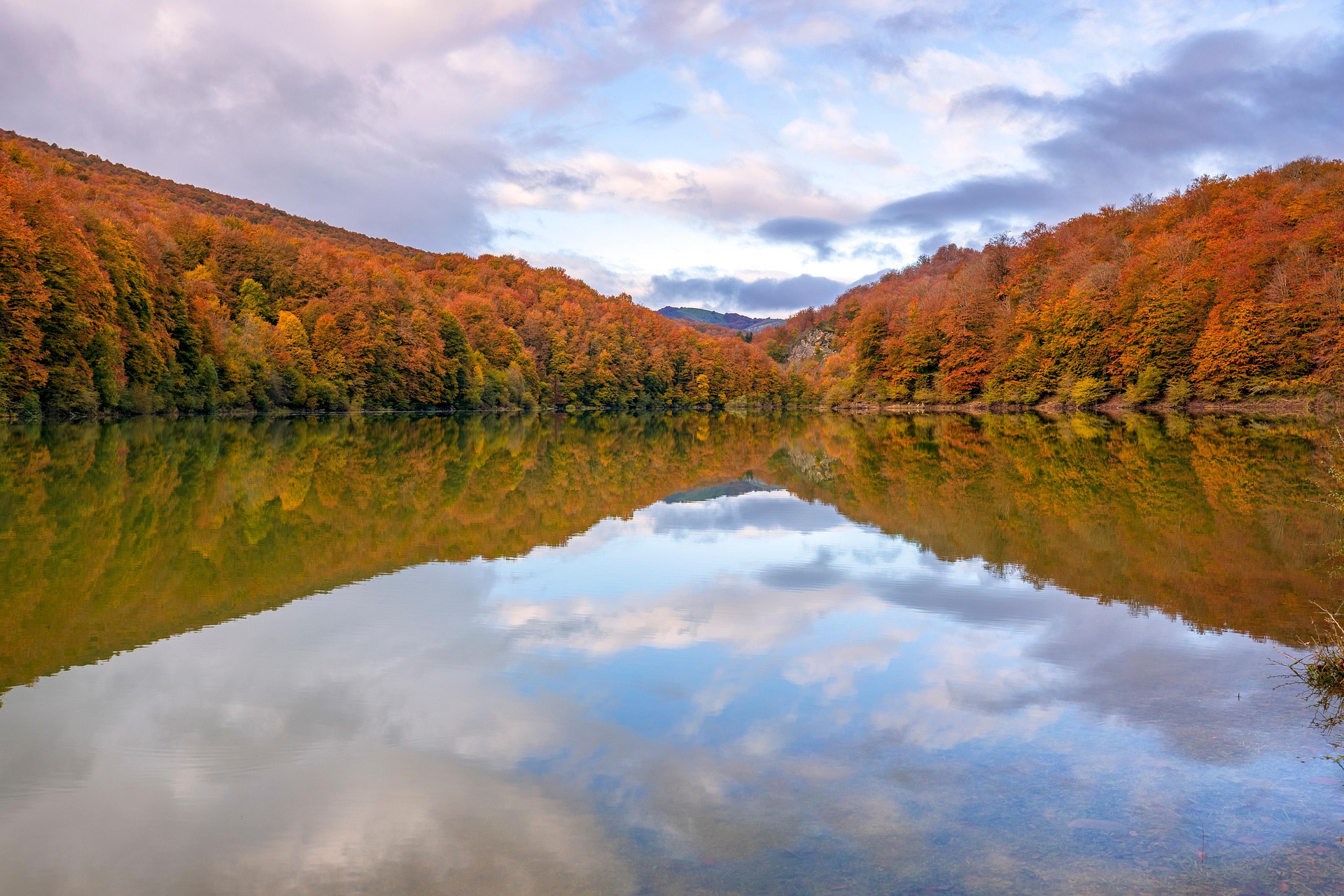
Ecosystems are not static. They pulse through seasons, shift across landscapes, and reorganize over decades in response to climate, disturbance, and biological interactions. Understanding nature’s impact and potential requires first understanding this variation — how ecological properties change across space, and how they change through time.
Our research in this domain spans several interconnected dimensions. Phenology — the timing of leaf-out, flowering, fruiting, and senescence — sets the temporal rhythms that govern carbon uptake, water use, and species interactions. As climate warms, these rhythms are shifting, with cascading consequences that we are only beginning to quantify. Functional traits capture how individual plants and organisms are built to operate: their leaf economics, wood density, rooting strategies, and hydraulic architecture. Aggregated across communities, traits determine what ecosystems can do. Ecosystem structure — canopy height, layering, gap dynamics, above- and belowground architecture — determines how efficiently those functions are expressed. And landscape connectivity governs whether species can track shifting conditions, whether disturbances spread or are contained, and whether restored patches can recruit the biodiversity needed to recover full function.
Together, these axes — function, structure, phenology, connectivity — form the mechanistic backbone of our research program. They are the variables we measure, model, and project forward in time to understand both where nature stands today and where it could go.

Biodiversity
Biodiversity is both a property to be measured and a force to be understood. We assess how species diversity, functional diversity, and phylogenetic diversity vary across landscapes and climate gradients — drawing on field observations, herbarium records, and global databases to characterize biodiversity patterns and anticipate how they will shift. But we also ask what biodiversity does. Our research has shown that greater diversity buffers ecosystems against climate extremes, dampening the response of spring leaf-out to warming across species-rich communities. Diversity also confers resistance to invasion — native species richness reducing the severity of non-native tree establishment. Together, these findings reframe biodiversity not just as a conservation target, but as a functional property that shapes how ecosystems respond to the pressures of global change.

Ecosystem function and structure
What ecosystems do — and how much they can do — depends on how they are built. Canopy architecture, vertical layering, and three-dimensional structure determine how efficiently forests intercept light, cycle nutrients, and regulate water. Underlying these structural properties are the functional traits of the organisms that compose them: leaf economics, wood density, hydraulic architecture, and rooting strategies that collectively set the pace of carbon and water fluxes. We map these properties across spatial scales, from individual stands to global gradients, combining field measurements, remote sensing, and trait databases to understand how structure and function vary, co-vary, and respond to climate and disturbance.

Landscape dynamics and connectivity
Ecosystems do not exist in isolation — their capacity to function depends on how they are connected across space. Habitat fragmentation breaks the pathways through which species disperse, genes flow, and disturbances are buffered, eroding ecological resilience even where local habitat quality remains high. We study how fragmentation alters community composition, functional diversity, and ecosystem processes across fragmented landscapes, and what levels of connectivity are needed to sustain them. This work informs where restoration and conservation effort can most effectively reconnect the ecological networks that underpin nature’s broader impact on climate, water, and biodiversity.

Phenology
The seasonal rhythms of nature — when trees leaf out, when flowers open, when leaves turn and fall — are among the most sensitive indicators of environmental change we have. Phenology, the study of these recurring biological events and their timing, sits at the intersection of plant physiology, climate science, and ecosystem ecology. It determines the length of the growing season, the timing of carbon uptake, and the synchrony between plants and the insects, birds, and animals that depend on them. As climates shift, these rhythms are changing in ways that are neither simple nor uniform — and understanding why requires unpacking the environmental cues, physiological mechanisms, and evolutionary strategies that govern when plants choose to grow.